
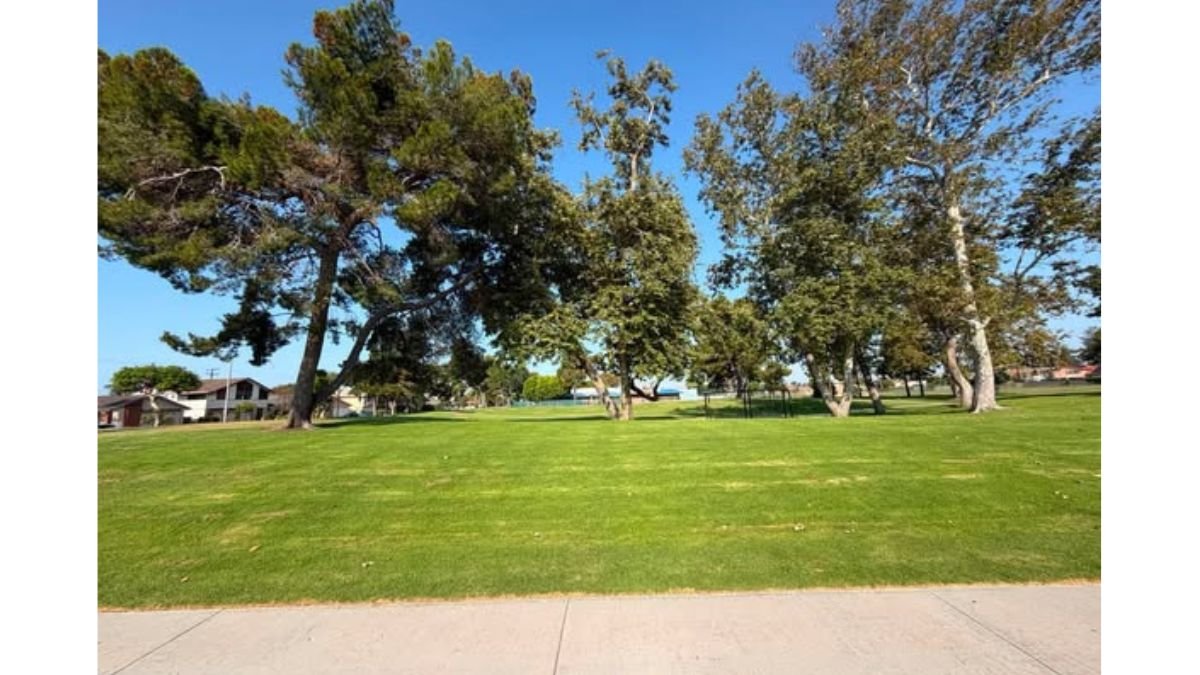
Huntington Beach is moving forward with two major park projects aimed at expanding recreation options and making public spaces more accessible to residents of all ages and abilities.
Edison Community Park’s $14 Million Makeover
Edison Community Park, the city’s second-largest park at 40 acres, is undergoing a $13.7–$14 million redevelopment. In March 2026, the City Council approved a plan designed to balance community needs with environmental constraints tied to the site’s former landfill and nearby oil wells.
Planned upgrades include a new playground with modern equipment, expanded soccer overlays for youth sports, relocated pickleball courts with sound mitigation, new bocce ball courts, wheel sports areas, and upgraded irrigation and drainage systems.
The city is also implementing a two-for-one tree replacement strategy, planting larger specimens while preserving 152 healthy mature trees already on site.
Construction will happen in phases, with costs per phase estimated between $5.8 million and $7.1 million. The city has set aside $4.352 million to fund the initial phase.
Conditions attached to the project include coordinating traffic flow, minimizing noise, and protecting existing greenery throughout construction.
Wieder Park’s Inclusive Playground
In February 2025, the city opened a new playground at Harriett M. Wieder Regional Park built specifically with inclusivity in mind. The space includes two separate play areas for children ages 2–5 and 5–12, along with wide, smooth pathways designed for wheelchair access.
The playground also features sensory panels offering tactile, auditory, and visual stimulation, plus a six-seat “Rock with Me” glider that accommodates mobility devices.
Thanks to its barrier-free design, the playground has been recognized as a National Demonstration Site by PlayCore, a distinction highlighting its role as a model for inclusive play spaces nationwide.
A Broader Vision for Community Spaces
Together, the two projects reflect Huntington Beach’s push toward recreation that is both accessible and sustainable. City officials say the goal is to ensure children with disabilities have equal opportunities to play, expand athletic offerings like soccer and wheel sports, and incorporate resident feedback into design decisions.
Residents have generally welcomed the city’s approach, which aims to modernize aging facilities without sacrificing environmental responsibility.
As construction on Edison Park continues in phases, city leaders say they’ll keep balancing budget realities with community expectations while keeping the process transparent.
Between Edison Park’s expanded amenities and Wieder Park’s award-recognized inclusive design, Huntington Beach is positioning its park system as a model for how cities can combine modern recreation with accessibility — creating spaces where residents of all ages and abilities can gather and thrive.